Need help?
A DOT drug or alcohol violation can change a CDL driver's work status immediately. Once a covered violation occurs, the driver cannot continue performing DOT safety-sensitive functions until the federal Return-to-Duty requirements have been satisfied.
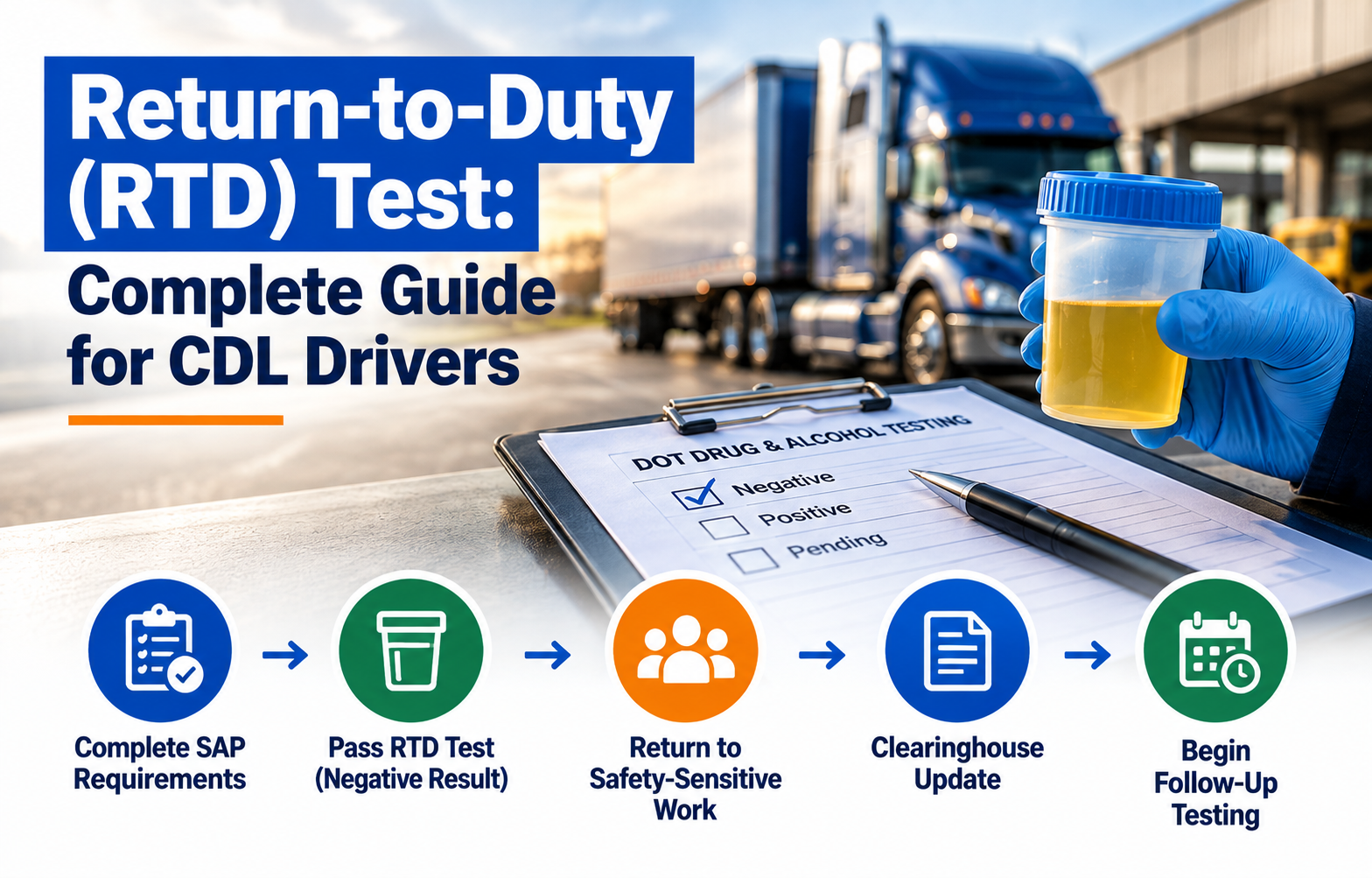
The process is more structured than simply taking another test. It involves a qualified Substance Abuse Professional, education and/or treatment when prescribed, a follow-up SAP evaluation, a specific Return-to-Duty test, and follow-up testing after the driver returns to safety-sensitive work.
The first consequence is removal from safety-sensitive functions. For an FMCSA-regulated CDL driver, operating a commercial motor vehicle that requires a CDL is a safety-sensitive function. DOT rules do not determine whether the carrier fires, suspends, or later rehires the driver, but they do determine when the driver may legally perform regulated safety-sensitive work again.
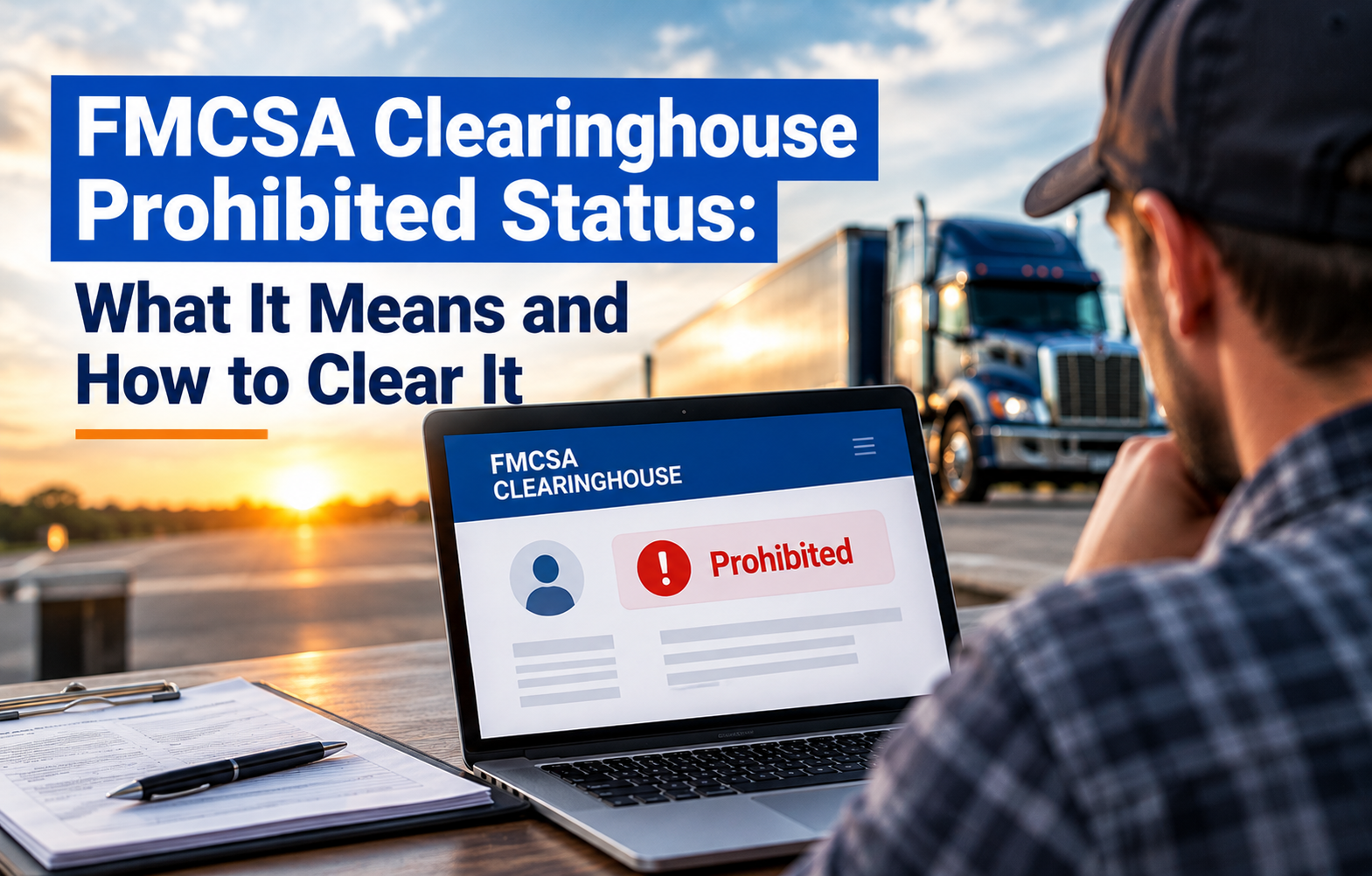
For FMCSA drivers, covered violations are also reported through the Drug and Alcohol Clearinghouse. A driver whose status is Prohibited cannot perform safety-sensitive functions for a DOT-regulated employer. Changing carriers does not make an unresolved violation disappear.
Since the Clearinghouse-II requirements took effect on November 18, 2024, a Prohibited Clearinghouse status can also affect state-issued commercial driving privileges. Drivers should therefore check both their Clearinghouse account and, when necessary, their state licensing status.
The route back begins with a qualified SAP. During the initial evaluation, the SAP determines what education, treatment, or combination is appropriate. The recommendation is individualized rather than a standard program that every driver completes in the same amount of time.
After the driver completes the prescribed requirements, the SAP conducts a follow-up evaluation. The SAP reviews the driver's compliance and determines whether the driver has successfully completed enough of the recommendation to move forward in the Return-to-Duty process.
A driver should not confuse this stage with the Return-to-Duty test itself. The SAP evaluation and compliance determination must come first.
A common misunderstanding is that a driver can take another pre-employment or private drug test and use a negative result to return to regulated driving. That does not replace the DOT Return-to-Duty process.
The Return-to-Duty test is a specific regulatory test conducted after successful SAP compliance. If an employer decides to put the driver back into a safety-sensitive position, the employer must ensure that the proper RTD test occurs and that the required result is received before the driver resumes those duties.
For a drug violation, the required RTD drug result is negative. For alcohol, the required result is below 0.02.
Once the federal Return-to-Duty requirements are satisfied, the driver can become eligible to resume safety-sensitive work. That eligibility does not create a right to a job; the carrier still makes its own hiring or return-to-work decision.
After the driver returns, the SAP's follow-up testing plan begins. Federal rules require at least six unannounced follow-up tests during the first 12 months of safety-sensitive duty, and the SAP can prescribe additional testing for as long as 60 months.
This is why drivers should think of the process as two phases: getting back to eligible status and then completing the follow-up testing obligations while working.
After a violation, the most useful approach is to verify the exact violation and current Clearinghouse status, work with a qualified SAP, complete the prescribed requirements, and keep track of the stage of the Return-to-Duty process. Drivers looking for a new carrier should be clear about whether they are still Prohibited, SAP-compliant but awaiting an RTD test, or already Not Prohibited with follow-up testing remaining.
Those distinctions matter because employers may accept drivers at different stages even though the federal Return-to-Duty rules themselves remain the same.
For the current federal rules and official guidance, use the DOT and FMCSA resources below.
Continue with related guides about the DOT SAP Program, Return-to-Duty process, Clearinghouse, and follow-up testing.
© 2026 SAPTruckingJobs.com. All Rights Reserved.